Bedding Guide
How to Choose a Silk Blanket for Year-Round Comfort
A silk blanket can be a remarkably light addition to a bed, but its comfort depends on more than the word silk on a label. Fill weight, construction, dimensions, climate, and care all shape how it behaves once the room is dark and the temperature begins its nightly negotiation.
There is a particular appeal to a bed that feels finished without feeling overbuilt. A blanket is often what achieves it: an extra layer that can be drawn up on a cool evening, folded back when the room warms, or left at the foot of the bed in readiness for a change of weather. Silk blankets invite a slightly different calculation from thick wool or lofty down. They are valued for a light hand and an even, breathable feel, but their performance depends on the details of their construction.
Choosing one is less a matter of finding the most luxurious-sounding description than of asking a few ordinary questions. How warm is the bedroom through the year? Will the blanket sit directly against the body, or beneath a duvet? What size is the mattress, and how much drape do you prefer? And, perhaps most consequentially, are you comfortable caring for a delicate textile with a little more attention than a standard cotton cover requires?
Those questions make the difference between a blanket that becomes a useful part of the bedding rotation and one that looks beautiful in theory but spends most of the year folded away. The best choice is the one that fits the sleeper, the bed, and the routines of the household—not an abstract idea of luxury.
Begin with the role the blanket will play
Before comparing fiber weights or finishes, decide what you want the blanket to do. A silk blanket might serve as a light top layer on its own, as an insulating layer beneath a duvet, or as a flexible cover for someone whose comfort changes over the course of the night. Those uses are related, but not identical. A blanket intended to replace a heavier cover in summer should be judged differently from one meant to add a modest measure of warmth in winter.
For warm rooms, or for sleepers who tend to feel hot, a lighter blanket may be most appealing as a breathable layer with a gentle presence. It can provide coverage without the substantial mass of a thick comforter. In colder weather, the same blanket may work better as part of a system: sheets next to the body, a silk layer above them, and a duvet or quilt added when the room calls for more insulation. Layering lets each piece do a narrower job and gives the sleeper options when conditions shift.
Think about how bedding is actually used at home. Some people turn the thermostat down at night and pile on covers; others keep the room warmer and prefer a thin cover they can move easily. A partner may want more warmth than you do. A blanket that is easy to fold back can be useful in either case, while a very large or heavy layer may be harder to adjust in the middle of the night.
The word “year-round” should not be taken to mean that one blanket will feel equally warm in every season. Rooms vary, bodies vary, and weather does what it likes. A silk blanket may be versatile because it can be layered and used in different ways, not because it somehow abolishes the need to adapt the bed.
Understand fill weight—and what it does not tell you
Fill weight is one of the most useful points to compare when looking at a filled silk blanket. It describes the amount of filling, but it is not, by itself, a complete measure of warmth. A higher figure may indicate more material in the blanket; the final feel also depends on the blanket’s size, how the filling is distributed, the fabric surrounding it, and the way the layers are stitched together.
Two blankets with the same stated fill weight can feel different. One may have a generous cut, spreading its filling over a larger surface; another may be smaller and feel denser. A smooth, tightly constructed outer shell can also affect the way a blanket drapes and how readily it shifts. For this reason, compare fill weight alongside dimensions and construction rather than treating it as a ranking system.
Ask the practical question: do you want a light cover that adds a little warmth, or a more substantial layer for a cool room? Product descriptions should ideally state the fill type, the fill weight, the outer material, and the finished dimensions. If any of those are missing, the description leaves important work to the imagination. “Lightweight” can be a useful adjective, but without measurements it is difficult to compare one blanket with another.
It is also worth separating the filling from the shell. A blanket may contain silk filling while its outer fabric is cotton or another material. That combination can still make a comfortable bed layer, but it is not the same as a blanket made entirely from silk. Read the materials list carefully, especially if you have a particular preference for the surface that touches your skin.
Specifications help set expectations; they do not substitute for a clear description of use. If you are unsure whether a blanket is designed to be used alone or layered under a duvet, check the maker’s guidance. The answer can tell you more about its intended role than a string of elegant adjectives.
Look closely at construction
The filling must stay reasonably even for a blanket to feel consistent. Construction details—such as quilting, stitching, or other methods of securing the layers—help hold the contents in place. Without adequate restraint, filling can shift, creating areas that feel thinner or more crowded. A tidy appearance on the bed is pleasant; an even distribution of material is what makes the blanket pleasant to use.
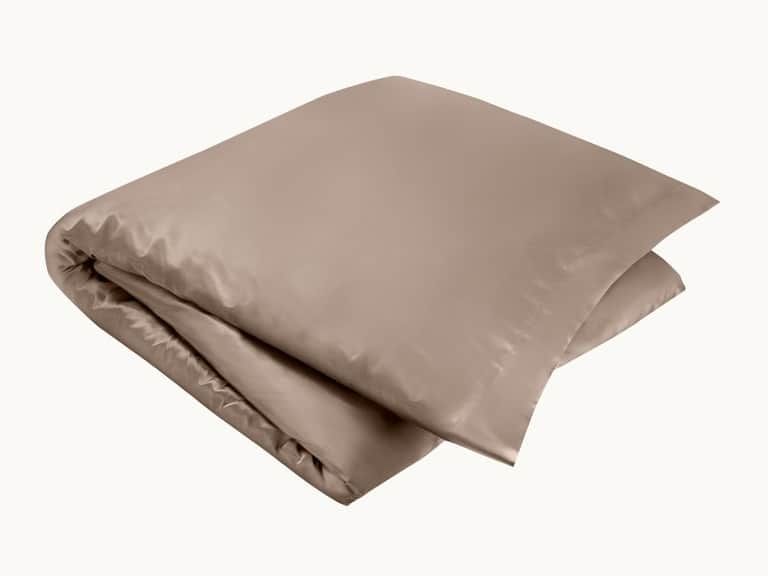
Examine how the blanket is finished around its edges, too. A bound edge or satin trim may protect the perimeter and give it a clean outline, but finishing is also a tactile detail. If you are sensitive to seams or raised trims, consider whether that border will be noticeable against your skin. The small features that are easy to overlook in a product description can become surprisingly familiar after a few months of nightly use.
Construction also affects how well a blanket works with the rest of the bed. A slippery surface may feel smooth but move more readily over certain sheets. If you intend to place the blanket beneath a duvet, consider whether the combination will stay in position. If it will sit on top, think about the visual and physical effect of its drape. A blanket that bunches at the foot of the bed may be less convenient than one that lies neatly across the mattress.
Durability cannot be judged from a photograph or a short feature list alone. Clear information about stitching, edging, material composition, and care is a better starting point. When a maker provides a specific description of construction, use it to understand how the blanket is assembled rather than assuming that every silk-filled blanket is made the same way.
Get the dimensions right
Size is not a decorative afterthought. A blanket that is too small may leave the shoulders or feet uncovered, particularly if two people share a bed. One that is much larger than the mattress can drag, catch on furniture, or make the bed look untidy. Start with the mattress size, then compare it with the blanket’s finished dimensions. Do not assume that a label such as “queen” or “king” means exactly the same measurements across brands or countries.
Consider the amount of overhang you like. Some sleepers prefer a close fit that stays within the mattress edges; others like a generous drop on either side. The height of the mattress and the presence of a topper can change the way a blanket falls. If the blanket is intended to sit beneath a duvet cover, it may not need as much decorative overhang as one that will be visible on top.
Sharing a bed adds another small calculation. A blanket that is ample for one sleeper may become a nightly contest when two people tug it in opposite directions. In that situation, extra width can matter more than a grander fill weight. Conversely, a blanket used primarily as an individual layer or folded at the end of the bed may not need the dimensions of a full bed covering.
Check measurements in the units you use, and confirm whether a listing describes the blanket itself rather than a package or duvet cover. A clear product specification is more reliable than assumptions based on familiar bedding names.
Compare silk with other bed layers
Silk is one choice among several, and each fiber brings its own habits to a bed. Cotton blankets are familiar and often straightforward to launder, though their weight and warmth vary widely with weave and construction. Wool can provide substantial warmth and a textured feel, making it appealing in colder rooms, but it may be too warm or heavy for some sleepers. Down and synthetic-filled comforters can offer considerable insulation and loft; depending on the product, they may feel bulkier than a light silk layer.
A silk blanket’s attraction often lies in the balance between coverage and weight. It can add a layer without necessarily making the bed feel as heavily packed as a thick comforter. That does not mean it is automatically cooler than every cotton blanket or warmer than every alternative. The exact experience depends on the materials, the construction, and the conditions of the room. Fiber names are clues, not guarantees.
It helps to think in terms of a bedding system rather than a single winner. A breathable sheet, a light blanket, and a duvet stored nearby can offer more control than one cover expected to solve every seasonal problem. A silk layer may fit into that arrangement as a middle weight: useful when a sheet alone is not quite enough, and easy to combine with a warmer cover when it is.
Some households also use a blanket for purposes beyond sleep: as a layer for reading, resting, or adding warmth to a chair. If you expect that kind of daily handling, durability and cleaning become especially important. The finest hand in a showroom matters less if the blanket’s required care makes you reluctant to use it.
Care is part of the buying decision
Silk is a delicate fiber, and a silk blanket may need more measured care than a conventional washable throw. The maker’s instructions should determine how it is cleaned. Some items may allow gentle machine washing; others may require professional cleaning or another specific method. Never assume that all silk bedding can be treated in the same way, and do not rely on a general rule when the product label gives a different instruction.
Before buying, read the care directions all the way through. Check the permitted water temperature, detergent guidance, drying method, and whether ironing is recommended. If a blanket should not be tumble-dried, for instance, make sure you have somewhere to air-dry it without stretching or crushing it. A careful routine is easier to keep when it fits the realities of the household.
Regular airing and sensible storage can help reduce the need for unnecessary washing, but they are not a substitute for cleaning when the item needs it. Follow the maker’s recommendations, and avoid harsh detergents or aggressive handling unless the instructions explicitly permit them. When stains occur, prompt attention may help, but improvised treatments can damage a delicate textile. For a substantial mark, seek guidance from the manufacturer or a qualified textile cleaner before experimenting.
Care instructions also say something about the blanket’s practical character. A textile that is beautiful but difficult to maintain may be right for someone who enjoys careful laundering; it may be less suitable for a busy household looking for a wash-and-wear layer. There is no moral dimension to this choice. Convenience is a legitimate feature, and a blanket that can be used comfortably within your routine is often the more satisfying one.
Consider sensitivities and claims carefully
People often encounter claims about silk and skin, hair, allergies, or temperature regulation while researching silk bedding. Such statements should be read with care. A smooth textile may feel gentle to some sleepers, and the surface of a fabric can affect how it feels against skin or hair. But a blanket should not be treated as a medical product, and broad promises about health outcomes deserve skepticism.
If you have a known allergy or skin condition, consider the complete construction—not just the headline fiber. The filling, shell, dyes, finishes, and care products may all matter. Ask the seller for specific material information if the listing is unclear, and follow advice from a qualified clinician for medical concerns. A label or marketing phrase cannot establish that a textile is suitable for every person.
Temperature comfort is similarly individual. A material may have properties that help it feel breathable, but the warmth of a bed is also affected by room temperature, sleepwear, mattress materials, and the other covers in use. If you tend to overheat, a light layer that can be removed easily may be more useful than a blanket described with sweeping claims about staying cool.
A useful checklist before you buy
When comparing silk blankets, keep the decision practical. A concise checklist can make several polished product pages easier to evaluate:
- Intended use: Decide whether the blanket is for warm nights, colder-weather layering, or flexible use through the year.
- Materials: Confirm what the filling and outer shell are made from; do not assume the entire blanket is silk.
- Fill weight: Compare the stated weight alongside size and construction, not as a stand-alone warmth rating.
- Dimensions: Match the finished measurements to your mattress and preferred amount of overhang.
- Construction: Look for information about stitching, quilting, edging, and how the filling is held in place.
- Care: Make sure the washing, drying, and storage requirements suit your routine.
- Return and warranty terms: Review the seller’s policies so you understand what happens if the item is unsuitable or develops a problem.
- Evidence for claims: Treat broad health or performance promises as claims to verify, not automatic properties of every silk blanket.
This list is not meant to turn a bed purchase into a technical examination. It is simply a way to give the important details their proper weight. A pleasing color or a persuasive description may catch the eye; the dimensions and care label determine whether the blanket will be welcome at home.
The comfort of a well-chosen layer
A good blanket earns its place quietly. It is there when the bedroom cools, easy to set aside when it does not, and compatible with the sheets and covers already in use. Silk can be an appealing choice for that role when its lightness, surface, and care requirements suit the sleeper. The sensible choice is not necessarily the most elaborate one, but the one whose specifications make sense for the way the bed is used.
Start with the room and the routine. Compare fill weight with dimensions. Look at how the blanket is made, and read the care instructions before the purchase rather than after the first spill. If you plan to use it alongside other bedding, picture the layers together. These are small acts of attention, but bedding is made of small acts of attention: the sheet tucked in, the cover pulled up, the extra layer waiting nearby.
Year-round comfort is not a property stamped onto a textile. It is an arrangement—of materials, room temperature, personal preference, and the freedom to add or remove a layer. A silk blanket can be part of that arrangement, offering a light and adaptable option. Choose it with its actual weight and care in mind, and it is more likely to become something useful than something merely admired.